
Healthy Communication vs. Conflict Avoidance: Why Silence Isn’t Always Peace
Many people believe a healthy relationship is one without conflict. If no one is arguing, everything must be fine, right? Not necessarily. In reality, conflict avoidance can quietly erode a connection just as much as constant fighting.
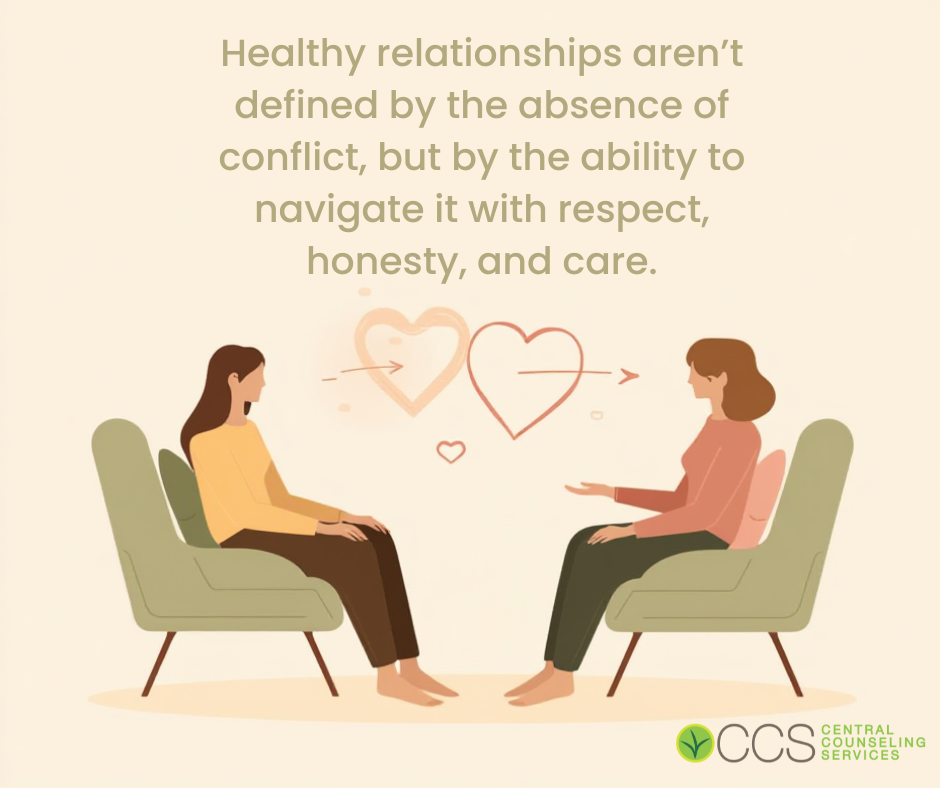
Healthy relationships aren’t defined by the absence of conflict, but by the ability to navigate it with respect, honesty, and care.
What Conflict Avoidance Looks Like
Conflict avoidance often comes from good intentions. People avoid bringing things up because they don’t want to hurt their partner, cause tension, or risk disconnection. Over time, however, unspoken feelings don’t disappear, they accumulate.
Signs of conflict avoidance may include:
Saying “it’s fine” when it’s not
Letting resentment build instead of addressing concerns
Shutting down during difficult conversations
Prioritizing peacekeeping over honesty
While silence can feel safer in the moment, it often creates emotional distance and misunderstanding over time.
Why Avoiding Conflict Can Be Harmful
When concerns go unspoken, partners lose opportunities to understand each other. Emotional needs remain unmet, and resentment can quietly replace intimacy. Many couples feel disconnected without knowing exactly why.
Avoidance can also increase anxiety. When issues aren’t addressed, the nervous system stays on alert, anticipating future conflict instead of resolving it.
What Healthy Communication Actually Looks Like
Healthy communication doesn’t mean perfect wording or calm conversations every time. It means both people feel safe enough to express themselves and confident that repair is possible.
Healthy communication includes:
Speaking openly about feelings without blaming
Listening to understand, not to win
Taking responsibility for impact, even when intentions were good
Returning to conversations after emotions cool down
Conflict handled well can actually strengthen relationships by building trust and understanding.
How to Practice Healthier Communication
If conflict feels uncomfortable or overwhelming, start small:
Use “I” statements to express feelings
Focus on one issue at a time
Take breaks when emotions escalate
Return to the conversation once regulated
Learning how to communicate through discomfort is a skill—and like any skill, it takes practice.
When Support Can Help
If communication patterns feel stuck, therapy can provide a neutral space to slow things down and understand what’s really happening beneath the surface. Family, couple, and individual therapy can help identify patterns, strengthen emotional awareness, and build tools for healthier conversations.
At Central Counseling Services, we support people in developing communication that feels respectful, honest, and connected, rather than exhausting or avoidant.
📞 Call or text 951-778-0230
🌐 Visit CentralCounselingServices.net
Next Week: Love Languages & Attachment Styles
