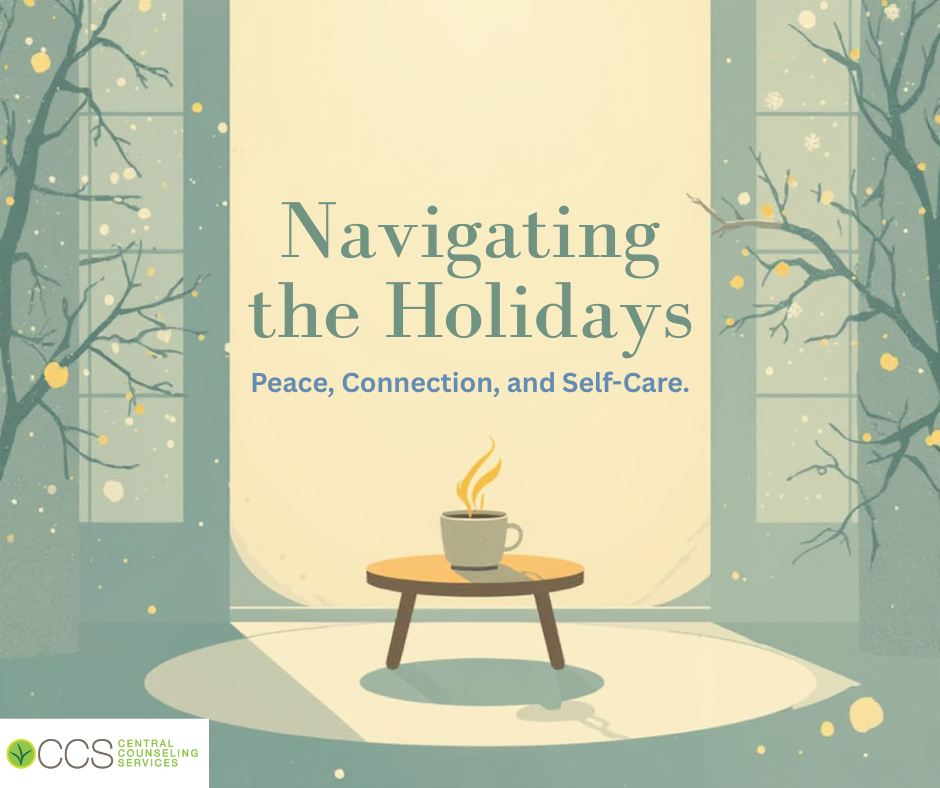
Giving to Yourself This Holiday Season: Caring for Your Mental Health
By Amy Kim, Student Therapist
The holiday season is often described as “the most wonderful time of the year,” a time filled with joy, connection, celebration, and generosity. And while all of that can be true, there’s also another side that many people quietly experience: emotional overwhelm, pressure to show up for everyone, and the weight of wanting everything to be just right. If you find yourself feeling stretched thin or emotionally overloaded this time of year, you’re not alone. And one of the most powerful things you can do is remember this: You deserve to give to yourself just as much as you give to others.
The Joy of Giving… and the Pressure That Comes with It
This time of year often comes with expectations, like family gatherings and traditions, financial
commitments, social obligations, and the emotional labor of making everything feel magical. Even when we love the season, it can still feel overwhelming.
Signs of holiday overwhelm can look like:
Feeling irritable or easily overstimulated
Feeling guilty when you say “no” or need rest
Being pulled in too many directions
Grief or loneliness resurfacing unexpectedly
These experiences don’t mean you’re ungrateful or not doing enough. They mean you’re human! There’s a common myth that taking care of yourself during the holidays somehow takes away from others. But the truth is, you can’t pour from an empty cup and self-care doesn’t have to be elaborate. Giving to yourself can look like: a few minutes of quiet before your day starts, asking for help with something you normally take on alone, letting go of perfection and choosing what feels meaningful, and setting healthy boundaries with your well-being in mind.
Boundaries can feel especially challenging during the holiday season, but they are essential for protecting your physical, mental, and emotional health. Boundaries aren’t about shutting people out, they’re about staying grounded so you can stay connected in a healthier, more authentic way. When we slow down and tune into what truly matters, the holidays feel less like a checklist and more like an opportunity to connect!
Healthy boundaries might look like:
Saying “I’m not able to make it but thank you for inviting me.”
Setting a realistic, manageable budget for gifts
Leaving an event early when you feel overwhelmed
Limiting conversations that feel triggering or heavy
Practical Self-Care for the Holiday Season
Here are a few gentle, accessible ways to take care of yourself during the giving season:
Micro Self-Care
Take a 5-10 minute walk alone to reset.
Practice deep breathing before gatherings.
Have a solo dance party to your favorite holiday song.
Emotional Self-Care
Allow space for whatever feelings come up, whether it be joy, stress, grief, or a mix.
Journal a few lines about what you need today.
Practice one daily moment of intentional gratitude.
Social Self-Care
Choose which invitations feel aligned with your energy.
Let yourself rest without apology.
Reach out to one supportive person when the week feels heavy.
Remember: The season of giving includes you! Caring for your mental health is a gift that ripples outward to everyone around you. This year, give yourself permission to rest, to set boundaries, and to honor your own needs. Your well-being matters, and you deserve to feel supported through the holidays and beyond.
When to Reach Out for Support
The holiday season can also bring up emotions like grief, loneliness, or anxiety. If you're feeling overwhelmed, reaching out for support is a sign of strength, not a setback.
At CCS Education & Wellness, we’re here to support you through all seasons of life, whether you need emotional tools, coping strategies, or simply a safe place to talk through what you’re carrying.
Call: (951) 742-7435
Email: info@wellnessccs.org

About Amy
Amy Kim is a student therapist at CCS Education & Wellness and a first-generation Korean American MSW candidate at the University of Kentucky. She is training to become an LCSW with a focus on trauma-informed, culturally responsive care. Amy brings a background in psychology, communication, and coaching, and is passionate about creating a safe, supportive space where clients feel seen, heard, and empowered.